

Celebrating Women-Owned Business Week (Oct 19 – 25)
Artificial Intelligence (AI) is reshaping the way we live, learn, and lead—but one question is emerging with particular urgency: Are women collaborating with AI differently than men?
Perhaps not “better,” but certainly differently—and in ways that may define the future of human-machine partnership. Research is beginning to reveal how women’s communication styles, decision-making approaches, and collaborative instincts uniquely shape their interactions with AI systems.
“As AI evolves faster than any technology before it, closing the gender gap isn’t just a matter of equity—it’s a matter of design. Women bring perspectives that make AI more ethical, empathetic, and effective.”
— Nicole Sroka, CEO of Mind Moves
Moms and the Everyday Use of AI
A recent survey of more than 500 mothers found that 85% use AI in their daily lives, and nearly 70% are interested in AI-generated personalized stories for their children. From writing assistance and creative content generation to household management, moms are weaving AI into everyday routines—often using it as a collaborator rather than a mere convenience.
Interestingly, many women approach AI as an iterative partner: asking clarifying questions, refining responses, and testing outcomes instead of taking the first answer as fact. This instinct toward “co-thinking” may be one of the most overlooked strengths in how society integrates AI.

The Politeness Factor: Saying “Please”
A Pew Research study found that women are significantly more likely than men to say “please” and “thank you” to AI companions like Alexa, Siri, and ChatGPT. On the surface, it sounds quaint—but it points to something deeper: a cultural instinct to build respectful, reciprocal relationships with technology.
How we talk to AI matters because it reflects how we see our role in the age of intelligent machines. Do we treat AI as a tool to control—or as a partner to learn with? Women’s tendency toward collaborative communication may help steer the latter path, modeling a more human-centered approach to AI adoption.
Gendered Approaches in AI Learning
In a 2023 Norwegian study of university students, researchers found that men tended to view AI chatbots as tools—focusing on technical functions and performance optimization—while women used AI primarily for comprehension, translation, and conceptual understanding. Women also expressed greater concern about critical thinking and over-reliance on machine output.
“Women often bring a depth of curiosity and multi-tasking agility that transforms the learning environment. It’s not just inspiring—it’s essential for the future of AI.”
— James Shanahan, UC Berkeley Founding Faculty of Masters in Data Science (MIDS) program and CTO of Mind Moves
This growing body of research underscores that diversity in AI development isn’t simply about fairness—it’s about function. Systems trained, tested, and deployed by a more representative set of voices will better reflect the full range of human experience.
Closing the Gender Gap in AI
Despite progress, the gender gap in technology remains striking. According to LinkedIn’s 2024 analysis, only 31% of AI professionals are women. The National Science Board reports that just 18% of female workers hold STEM occupations compared to 30% of men.
Yet momentum is shifting. Deloitte’s 2024 survey found that women’s use of generative AI tripled in one year—outpacing men’s adoption rate. At this trajectory, women in the United States may match or surpass men in AI experimentation and applied use by the end of 2025.
This acceleration suggests that women are not only catching up in access to AI but may also be pioneering more adaptive and socially attuned forms of collaboration.
The Future of Work Is “Phygital”
At Mind Moves, a women-owned small business, we see the next phase of AI adoption as Phygital—the fusion of Physical + Digital collaboration. The future workforce will be defined not by competition between humans and machines, but by their cooperation.
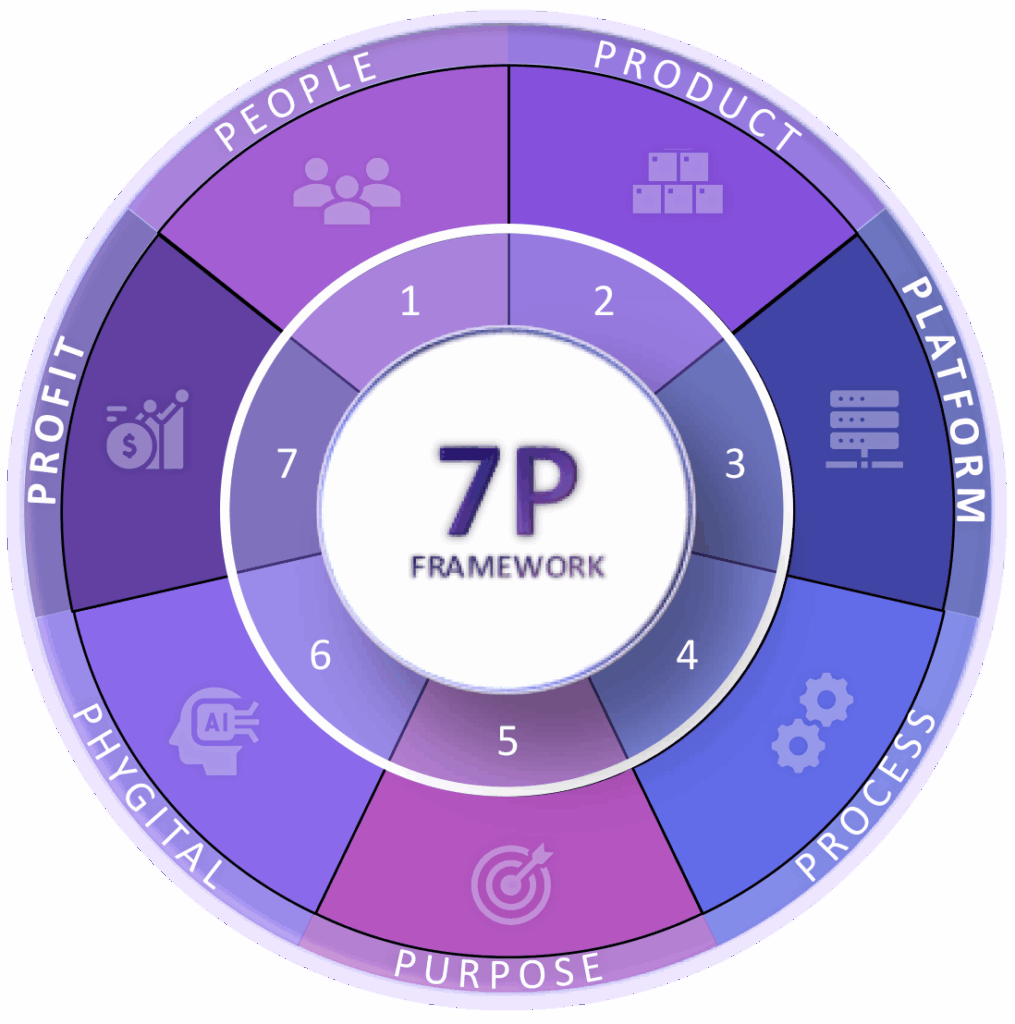
“Phygital” is one of seven dimensions in our 7P AI Capability Maturity Framework, a strategic model designed to help organizations assess, develop, and accelerate enterprise-wide AI adoption. Built around People, Product, Platform, Process, Purpose, Phygital, and Profit, the framework helps teams move from legacy operations to AI-driven innovation and measurable competitive advantage.
A More Human-Centered Future
Women are leading a quiet revolution in how AI is understood and applied—turning interaction into collaboration and computation into compassion. This Women-Owned Business Week, we celebrate the innovators, mothers, educators, and entrepreneurs who remind us that technology’s greatest potential is realized when it reflects the full spectrum of humanity.
Join us in building a more human-centered AI future.
https://mindmoves.co